
Sweet Science: How Natural Sugars Compare to Refined Sucrose
Rachel Carbone MS, BCDNM, LMT
We all know that consuming too much added sugar isn't optimal for our health. But are natural sources like maple syrup, honey, and dates better for you than refined sucrose? Let's dive into recent clinical studies to find out!
Maple Syrup: A Sweet Deal for Your Waistline and Heart
When researchers swapped out just 5% of daily calories from refined sugars with maple syrup, the results were impressive (Morissette et al., 2024). Over an 8-week period, overweight adults with mild metabolic alterations who consumed maple syrup experienced a lower blood glucose response compared to those consuming an equivalent amount of sucrose syrup (Morissette et al., 2024). Furthermore, the maple syrup group saw a significant reduction in android fat mass (belly fat) and a decrease in systolic blood pressure, whereas the sucrose group saw increases in these areas (Morissette et al., 2024). Maple syrup even promoted positive changes in the gut microbiome by reducing the abundance of Klebsiella bacteria (Morissette et al., 2024).
Caveats & Limitations:
Maple syrup remains a source of free sugars and calories, meaning it must still be consumed in moderation. The study evaluated a relatively short 8-week intervention in participants with mild metabolic alterations, so long-term effects and outcomes in larger, more diverse populations require further validation.
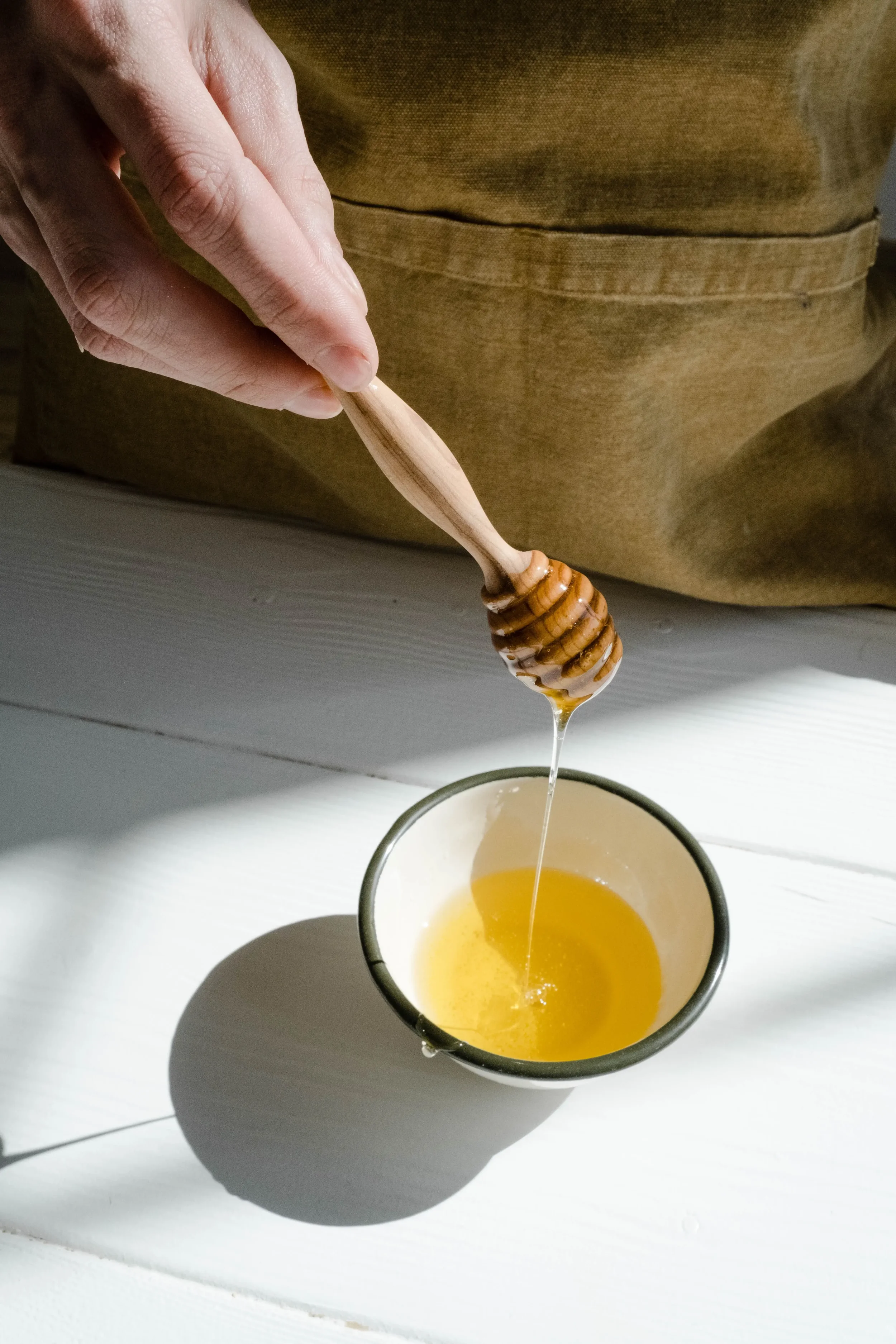
Honey: Better for Lipids and Probiotics
Honey also shows clear advantages over standard table sugar. In a 4-week study on adult men and women, participants who consumed sucrose had persistently elevated fasting triglycerides, but those eating clover honey saw their triglycerides return to baseline levels by the end of the month (Al-Tamimi et al., 2020). Interestingly, the participants eating honey also naturally consumed fewer total calories, fewer carbohydrates, less overall sugar, and less saturated fat than they did during the sucrose trial (Al-Tamimi et al., 2020).
Honey can also support your gut health. When honey was added to yogurt, it successfully enriched the survival of the probiotic Bifidobacterium animalis in the digestive tract significantly more than a control yogurt sweetened with regular sugar, although it didn't change overall intestinal transit times or mood (Mysonhimer et al., 2024). Another trial involving healthy males showed that substituting 25% of energy from dietary starch with honey resulted in slightly lower postprandial blood glucose and insulin levels, without negatively impacting blood triglycerides or hepatic insulin sensitivity (Despland et al., 2017).
Caveats & Limitations:
In the lipid study, the daily dose of honey provided 1.2 g carbohydrate per kg body weight (which nearly doubled baseline sugar intake), a level that may not be practical or realistic for daily consumption. In the yogurt study, while honey supported probiotic enrichment in the gut, it did not translate to functional clinical improvements in gut transit time, digestive symptoms, mood, or cognitive function in healthy participants. The honey study tested a small sample size of 8 healthy young males, meaning findings cannot be generalized to females or clinical populations. Furthermore, different honey varieties vary greatly in sugar and polyphenol composition, so results from one specific honey type cannot be applied to all varieties.
Dates: A Safe and Healthy Option for Diabetics
What about dates? For adults with pre-diabetes and type 2 diabetes, eating three dates a day for 16 weeks did not spike long-term blood sugar (HbA1c) or increase Body Mass Index (BMI) (Alalwan et al., 2020). Even better, daily date consumption led to significant improvements in the lipid profile, specifically through reductions in total cholesterol and LDL (bad) cholesterol (Alalwan et al., 2020). The participants also reported a significant improvement in their overall quality of life and mental health during the study compared to the control group that avoided dates (Alalwan et al., 2020).
Caveats & Limitations:
The study only tested a low dose of 3 dates daily (Khudary cultivar at the tamar stage), whereas people often consume larger quantities in real-world settings. The trial was not blinded, and the overall macronutrient distribution (such as quality of fats, proteins, and carbohydrates) of participants' diets was not specifically evaluated. Consequently, these findings may not apply to larger serving sizes or other fresh or sun-dried date cultivars.
The Bottom Line
While natural sources like maple syrup, honey, and dates still count toward your total sugar budget, clinical evidence suggests they offer unique metabolic, cardiovascular, and gut-health advantages over refined sucrose. However, because many studies feature short intervention periods, specific population groups, or fixed dosages, moderation remains key!
Disclaimer: The information provided in this article is for educational and informational purposes only and is based solely on the scientific literature reviewed above. It is not intended as medical or nutritional advice, nor should it be used as a substitute for professional medical diagnosis, treatment, or guidance. Always consult a qualified healthcare provider or registered dietitian before making significant changes to your diet, especially if you have an underlying medical condition like diabetes or dyslipidemia.
References
Al-Tamimi, A. M., Petrisko, M., Hong, M. Y., Rezende, L., Clayton, Z. S., & Kern, M. (2020). Honey does not adversely impact blood lipids of adult men and women: a randomized cross-over trial. Nutrition Research, 74, 87-95.
Alalwan, T. A., Perna, S., Mandeel, Q. A., Abdulhadi, A., Alsayyad, A. S., D'Antona, G., Negro, M., Riva, A., Petrangolini, G., Allegrini, P., & Rondanelli, M. (2020). Effects of daily low-dose date consumption on glycemic control, lipid profile, and quality of life in adults with pre- and type 2 diabetes: A randomized controlled trial. Nutrients, 12(1), 217.
Despland, C., Walther, B., Kast, C., Campos, V., Rey, V., Stefanoni, N., & Tappy, L. (2017). A randomized-controlled clinical trial of high fructose diets from either Robinia honey or free fructose and glucose in healthy normal weight males. Clinical Nutrition ESPEN, 19, 16-22.
Morissette, A., Agrinier, A.-L., Gignac, T., Ramadan, L., Diop, K., Marois, J., Varin, T. V., Pilon, G., Simard, S., Larose, É., Gagnon, C., Arsenault, B. J., Després, J.-P., Carreau, A.-M., Vohl, M.-C., & Marette, A. (2024). Substituting refined sugars with maple syrup decreases key cardiometabolic risk factors in individuals with mild metabolic alterations: A randomized, double-blind, controlled crossover trial. The Journal of Nutrition, 154(10), 2963-2975.
Mysonhimer, A. R., Brown, M. D., Alvarado, D. A., Cornman, E., Esmail, M., Abdiel, T., Gutierrez, K., Vasquez, J., Cannavale, C. N., Miller, M. J., Khan, N. A., & Holscher, H. D. (2024). Honey added to yogurt with Bifidobacterium animalis subsp. lactis DN-173 010/CNCM I-2494 supports probiotic enrichment but does not reduce intestinal transit time in healthy adults: A randomized, controlled, crossover trial. The Journal of Nutrition, 154(8), 2396-2410.