
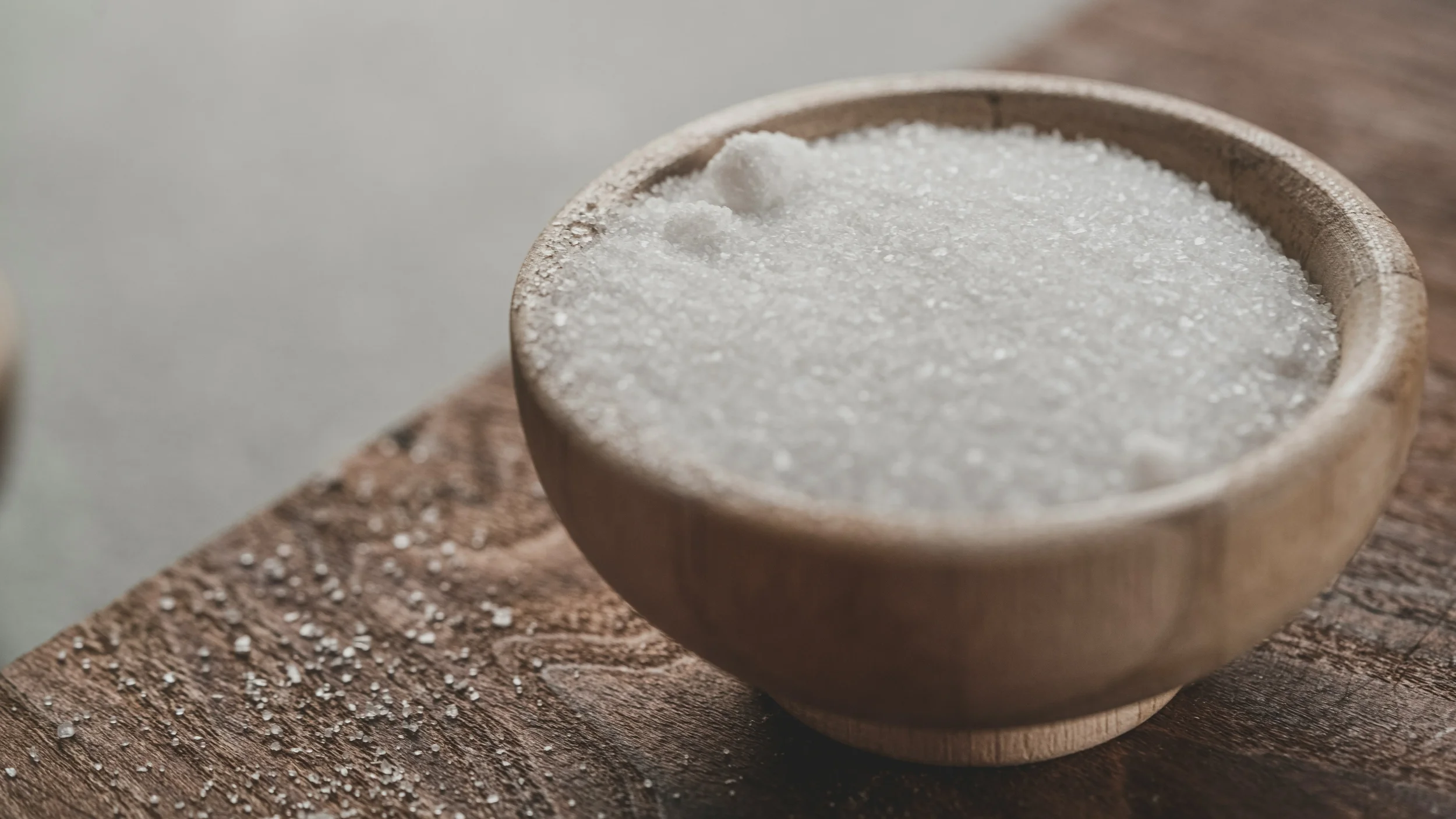
The rapid increase in sugar consumption has been linked to global epidemics of obesity and chronic cardiometabolic diseases (Teysseire, 2023). Because of this, many people have turned to non-caloric artificial and natural sweeteners as an appealing choice for reducing daily energy intake. While we often group these sugar alternatives together as a single dietary solution, our bodies actually react to them in vastly different ways, producing unique behavioral and physiological responses.
Weight Management and Appetite
Different sweeteners influence our body weight and feelings of fullness in unique ways. Consuming sucralose over a 12-week period has been shown to result in a lower body weight compared to other sweeteners like saccharin, aspartame, and rebaudioside A (Higgins & Mattes, 2019). In contrast, the regular consumption of both standard sugar (sucrose) and saccharin over the same period led to weight gain (Higgins & Mattes, 2019).
Behaviorally, when and what you consume matters. When consumed prior to a meal, sweeteners like xylitol and acesulfame potassium (ace-K) result in lower total energy intake during that meal compared to sucrose (Flad, 2025). Furthermore, xylitol and erythritol have been shown to delay gastric emptying—the speed at which food leaves the stomach—and successfully stimulate the release of gut peptides like cholecystokinin (CCK) and GLP-1, which act as satiety signals to the brain (Wölnerhanssen, 2016).
Blood Sugar Regulation
The impact of these alternatives on blood sugar varies significantly based on the specific compound used. D-allulose has demonstrated the ability to lower glucose and insulin excursions when consumed alongside a standard oral sucrose load (Franchi, 2021). Even during acute intragastric administration, D-allulose lowers glucose and insulin, whereas erythritol shows no effect on these markers but successfully reduces the hunger-associated hormone ghrelin (Teysseire, 2023).
For people managing type 2 diabetes, eight weeks of consistently consuming tea sweetened with either stevia or sucralose yielded no significant differences in fasting blood sugar, two-hour postprandial glucose, insulin, or HbA1c levels between the two groups (Ajami, 2020).
Gut Health and Lipids
Despite growing concerns about artificial sweeteners negatively altering the gut microbiome, recent data shows that daily consumption of stevia for four weeks does not significantly alter human gut microbiome composition or fecal short-chain fatty acid (SCFA) profiles when compared to sucrose (Kwok, 2024). The only major cardiometabolic difference noted in this trial was a slight increase in Body Mass Index (BMI) in the sucrose group (Kwok, 2024).
From a cardiovascular standpoint, a 5-week intake of erythritol and xylitol in humans with obesity found no statistically significant adverse effects on vascular function, blood lipids, or abdominal fat distribution (Bordier, 2023).
Understanding the Limitations of the Data While these clinical findings are promising, it is important to interpret them alongside their study design constraints:
Short-Term Designs: Many of these trials were strictly short-term, ranging from single acute doses to several weeks, preventing the evaluation of long-term safety, metabolic adaptation, or chronic efficacy (Teysseire, 2023); (Flad, 2025).
Unnatural Administration: Several acute trials utilized intragastric or nasogastric tube administration (Teysseire, 2023); (Wölnerhanssen, 2016). This bypasses normal oro-sensory taste cues (the taste buds in your mouth) and fails to mirror real-world eating and drinking behaviors.
Small Sample Sizes: Sample sizes were frequently small or unpowered to detect demographic or racial differences, making it difficult to generalize the findings to all populations (Bordier, 2023); (Franchi, 2021); (Ajami, 2020).
Methodological Flaws: Specific trials relied on self-reported dietary intake logs and 3-day diet records, which are known to be frequently underreported by participants (Higgins & Mattes, 2019); (Kwok, 2024).
Disclaimer: The information provided in this article is for educational and informational purposes only and is based solely on the scientific literature reviewed above. It is not intended as medical or nutritional advice, nor should it be used as a substitute for professional medical diagnosis, treatment, or guidance.
References
Ajami, M., Seyfi, M., Abdollah pouri Hosseini, F., Naseri, P., Velayati, A., Mahmoudnia, F., Zahedi, M., & Hajifaraji, M. (2020). Effects of stevia on glycemic and lipid profile of type 2 diabetic patients: A randomized controlled trial. Avicenna Journal of Phytomedicine, 10(2), 118-127.
Bordier, V., Teysseire, F., Drewe, J., Madörin, P., Bieri, O., Schmidt-Trucksäss, A., Hanssen, H., Beglinger, C., Meyer-Gerspach, A. C., & Wölnerhanssen, B. K. (2023). Effects of a 5-week intake of erythritol and xylitol on vascular function, abdominal fat and glucose tolerance in humans with obesity: a pilot trial. BMJ Nutrition, Prevention & Health, 6, e000764.
Flad, E., Altstädt, A., Beglinger, C., Rehfeld, J. F., Van Oudenhove, L., Wölnerhanssen, B. K., & Meyer-Gerspach, A. C. (2025). Effects of oral xylitol, sucrose, and acesulfame potassium on total energy intake during a subsequent ad libitum test meal: A randomized, controlled, crossover trial in healthy humans. Nutrients, 17(3), 484.
Franchi, F., Yaranov, D. M., Rollini, F., Rivas, A., Rios, J. R., Been, L., Tani, Y., Tokuda, M., Iida, T., Hayashi, N., Angiolillo, D. J., & Mooradian, A. D. (2021). Effects of D-allulose on glucose tolerance and insulin response to a standard oral sucrose load: results of a prospective, randomized, crossover study. BMJ Open Diabetes Research & Care, 9, e001939.
Higgins, K. A., & Mattes, R. D. (2019). A randomized controlled trial contrasting the effects of 4 low-calorie sweeteners and sucrose on body weight in adults with overweight or obesity. The American Journal of Clinical Nutrition, 109(5), 1288-1301.
Kwok, D., et al. (2024). Daily consumption of stevia-sweetened beverages for 4 weeks does not alter the human gut microbiome, fecal short-chain fatty acids, or fasting cardiometabolic measures compared with sucrose-sweetened beverages: A randomized controlled trial. The Journal of Nutrition, 154(4), 1298-1308.
Teysseire, F., Bordier, V., Budzinska, A., Van Oudenhove, L., Weltens, N., Beglinger, C., Wölnerhanssen, B. K., & Meyer-Gerspach, A. C. (2023). Metabolic effects and safety aspects of acute D-allulose and erythritol administration in healthy subjects. Nutrients, 15(2), 458.
Wölnerhanssen, B. K., et al. (2016). Gut hormone secretion, gastric emptying, and glycemic responses to erythritol and xylitol in lean and obese subjects. American Journal of Physiology-Endocrinology and Metabolism, 310(11), E1053-E1061.